FLASHING TAPE BUYER’S GUIDE
Butyl vs. bitumen flashing tape: which one fits your market?
The foil is the visible layer. The adhesive usually decides how the tape handles, where it fits in the market and which failures a buyer must screen out.
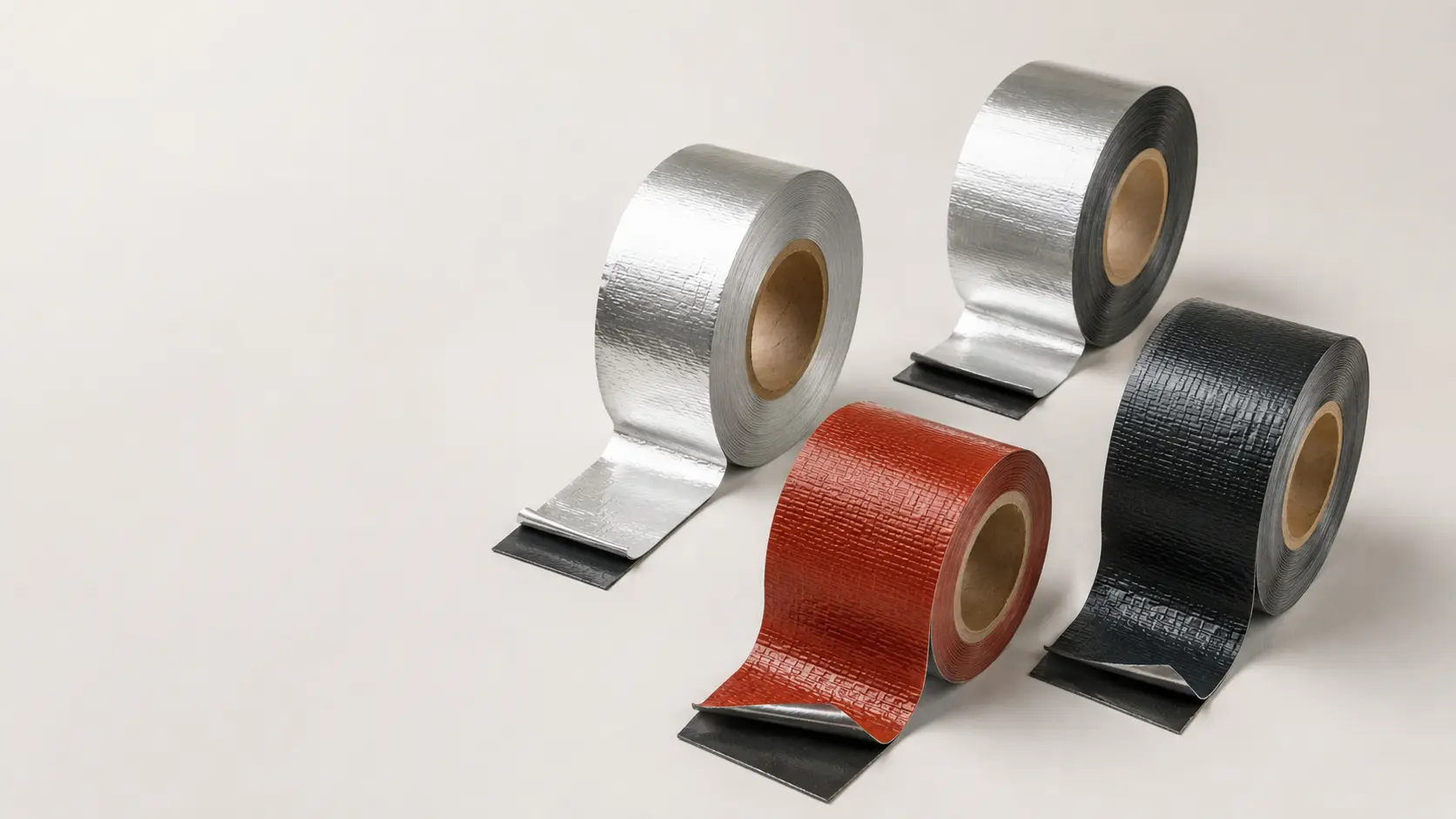
There is no universal winner.
Butyl and polymer-modified bitumen can both be developed into useful self-adhesive flashing tapes. The right choice depends on the substrate, climate, installation method, sales channel and target price. A material name alone does not prove adhesion, heat stability or compatibility.
Compare complete constructions—not just “butyl” against “bitumen.” Ask for the facing, adhesive formulation, reinforcement, liner, thickness and test method for the exact SKU.
QUICK COMPARISON
Two routes, different commercial logic.
These are sourcing tendencies, not universal performance claims. The approved sample and supporting data remain the final reference.
| Decision point | Butyl route | Bitumen route |
|---|---|---|
| Typical market position | Cleaner-handling, specification-led or retail-ready route | Economical, established route for general repair and maintenance |
| What buyers should check | Butyl formulation, thickness, facing bond and substrate compatibility | Bitumen formulation, reinforcement, heat stability and edge behavior |
| Application behavior | Often selected where conformability and controlled handling matter | Often selected for straightforward repairs on common building surfaces |
| Climate question | Confirm application temperature and service-temperature evidence for the exact SKU | Check cold-weather tack and high-temperature flow on the exact construction |
| Facing options | Aluminum or compatible polymer facings; selected colors may be developed | Aluminum foil, including custom surface colors, over a black bituminous layer |
| Price decision | Usually evaluated when handling, finish or complaint control supports a higher position | Usually evaluated when an accessible price point is central to the range |
FIRST DISTINCTION
Application temperature is not service temperature.
Application temperature describes the conditions in which the tape can be installed and pressed into contact with the substrate.
Service temperature describes the claimed operating range after installation. A wide service range does not mean the tape can be applied to a cold, damp or contaminated surface.
Published technical sheets illustrate why product-specific data matters: one current bituminous flashing-tape sheet lists a +5°C to +30°C substrate application range and a separate −10°C to +100°C resistance range, while butyl product data varies considerably by formulation and use. Do not transfer either range to another supplier’s tape without evidence.
MARKET FIT
Start with the channel and failure risk.
Retail roof repair
Evaluate liner release, clean handling, edge condition, instructions and packaging—not only initial tack. Butyl may support a more specification-led position; bitumen may support a value-led offer.
Metal-roof maintenance
Both routes may be relevant. Test the real paint or coating, the roof profile, primer requirement and thermal movement before approval.
Rough or porous surfaces
Surface preparation and primer can become decisive. A strong adhesive label does not compensate for dust, moisture or poor contact.
EPDM, TPO or PVC details
Do not assume universal compatibility. Check adhesion, staining or migration, edge lift and the membrane manufacturer’s requirements on the actual substrate.
BEFORE QUOTATION
Five questions prevent a misleading comparison.
Where will the tape be used?
Metal laps, gutters, penetrations, roofing felt and membrane details do not create the same adhesion or movement requirements.
What is the real substrate?
Ask for the coating, surface texture and cleaning method—not only “metal” or “roof membrane.”
What temperatures matter?
Separate the installation temperature from the service temperature. They describe different stages of the product’s use.
How will it be sold?
A contractor bulk pack and an Amazon-ready retail roll can justify different constructions, instructions and complaint tolerances.
What must the sample prove?
Define peel, edge, residue, facing bond and heat-aging checks before asking a factory to copy a visible appearance.
SAMPLE VALIDATION
A low-cost comparison should still test the right things.
- Use the real substrate.Include its coating, texture and normal cleaning method.
- Condition the samples.Compare installation handling at the temperatures relevant to the market.
- Check more than tack.Review peel, edge lift, residue, facing-to-adhesive bond and conformity around profiles.
- Add a heat check.Look for movement, edge ooze, staining or layer separation under an agreed time and temperature.
- Record the method.A result without substrate, dwell time, temperature and test method is difficult to compare or repeat.
THE BUYER’S DECISION
Choose by application evidence, then build the commercial offer.
Use butyl when the project’s handling, finish and validated performance support that route. Use bitumen when a tested, economical construction fits the surface, climate and channel. If the intended use is still unclear, compare one defined butyl sample and one defined bitumen sample under the same method before discussing a production order.
Explore our roof and flashing repair tape options →